











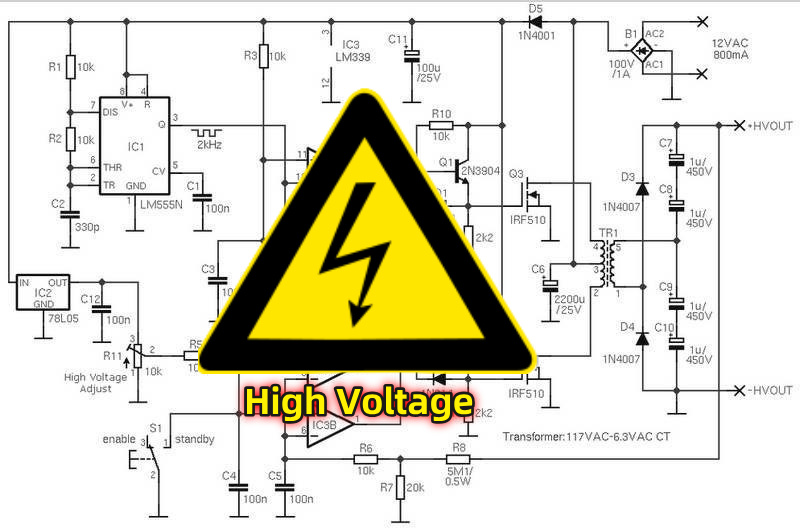
The Role of High Voltage Power Supplies: Powering Innovation at the Extremes
While standard power supplies deliver the common voltages that run our everyday electronics, High Voltage (HV) Power Supplies operate in a different realm. These specialized components are the unsung enablers of some of the most advanced technologies across science, medicine, and industry. Their role is not merely to provide power, but to create and control the intense electrical fields and energetic conditions necessary for breakthroughs that were once impossible.
This article explores the critical and diverse roles of high voltage power supplies, delving into how they are fundamental to innovation in several key fields.
1. Medical Imaging and Cancer Treatment: Precision at High Energy
In healthcare, HV power supplies are at the heart of life-saving diagnostic and therapeutic equipment, where precision and reliability are paramount.
- X-ray Generation (Diagnostic & CT Scans): An HV power supply (ranging from 30kV to over 150kV) accelerates electrons across a vacuum tube to strike a metal target, producing the X-rays used for imaging. The stability of the HV supply directly determines image clarity and dosage control.
- Radiation Therapy (Linear Accelerators): To destroy cancerous tumors, Linacs use HV power supplies (in the MV range) to accelerate electrons to near-light speeds. These electrons are either used directly or converted into high-energy X-rays, with the HV system’s precision ensuring the beam targets only the tumor, sparing healthy tissue.
- Molecular Imaging (PET & SPECT): In Positron Emission Tomography, detectors called photomultiplier tubes (PMTs) require a stable HV bias (typically 500-1500V) to amplify tiny flashes of light from scintillation crystals into measurable electrical signals, creating detailed 3D images of metabolic processes.
2. Scientific Research and Analysis: Unveiling the Building Blocks of Matter
HV power supplies are indispensable tools for probing the fundamental secrets of the universe.
- Mass Spectrometry: In instruments like Time-of-Flight (TOF) and Quadrupole MS, HV supplies create the electrostatic fields (hundreds to thousands of volts) that ionize samples and propel ions through the analyzer. The accuracy of these voltages is crucial for determining molecular mass with extreme precision.
- Particle Physics: Large-scale experiments like particle accelerators (colliders) and fusion research devices (tokamaks) rely on massive, complex HV systems to generate the potentials needed to control and accelerate subatomic particles, probing the laws of physics.
- Electron Microscopy (SEM & TEM): To achieve nanometer-scale resolution, electron microscopes use HV supplies (from 1kV to 300kV+) to create a high-energy beam of electrons. The voltage defines the beam’s wavelength and, consequently, its resolving power.
3. Industrial and Manufacturing Applications: Enabling Advanced Processes
Beyond the lab and clinic, HV power supplies drive efficiency and enable unique manufacturing capabilities.
- Electrostatic Processes: This is a vast category where HV creates a strong electric field for precise control.
- Precipitation: Industrial electrostatic precipitators use HV (50-100kV) to charge dust and smoke particles, removing them from exhaust gases for cleaner air.
- Spraying & Coating: Electrostatic painting and powder coating use HV to charge material particles, ensuring they wrap evenly around a grounded object, reducing waste and improving finish quality.
- Non-Destructive Testing (NDT): Techniques like X-ray inspection for welds or composite materials rely on portable or cabinet HV systems to generate the penetrating radiation needed for quality control.
- Semiconductor Manufacturing: Critical processes such as ion implantation, plasma etching, and sputter deposition for chip fabrication require highly regulated HV supplies to control the energy and direction of ions in a vacuum chamber.
The Unique Engineering Demands
The role of an HV power supply comes with exceptional challenges that define its design:
- Safety and Reliability: Failures at high voltage can be catastrophic. Designs emphasize robust insulation, interlock systems, and precise current limiting.
- Stability and Low Ripple: Even minuscule fluctuations in output voltage or current (ripple) can distort results in sensitive applications like mass spectrometry or electron microscopy.
- Form Factor and Efficiency: Applications like portable X-ray or airborne equipment demand compact, lightweight, and efficient HV modules that minimize heat generation.
- Programmability and Control: Modern HV supplies are often digitally controlled, allowing for complex output sequences, remote monitoring, and integration into automated systems.
Conclusion
High Voltage Power Supplies are far more than niche components; they are fundamental enablers of technological frontiers. From revealing the inner workings of a single cell to painting a car with perfect efficiency, their role is to master electrical potential at its highest levels. As technologies in medicine, scientific analysis, and advanced manufacturing continue to push boundaries, the demand for more precise, reliable, and innovative high voltage power solutions will only grow. Understanding their critical role is the first step in harnessing their power for the next generation of breakthroughs.

關於作者











新增評論