











What Is a Power Supply Unit?
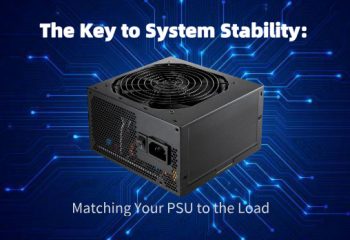
A Power Supply Unit (PSU) is an internal hardware component that converts the alternating current (AC) from your wall outlet into the direct current (DC) required by your computer’s sensitive internal parts. It doesn’t just “supply power”—it regulates, refines, and protects.
Key Functions of a PSU:
- Voltage Conversion & Regulation: It transforms 110V/230V AC power into stable, low-voltage DC outputs (primarily +12V, +5V, and +3.3V) that your motherboard, CPU, storage, and peripherals need to operate.
- Power Stability & Ripple Suppression: A high-quality PSU delivers “clean” power with minimal electrical noise or voltage fluctuation, preventing system crashes, data corruption, or component stress.
System Protection: Modern PSUs incorporate critical safeguards such as:
- OVP/UVP (Over/Under Voltage Protection)
- OCP (Over Current Protection)
- SCP (Short Circuit Protection)
- OPP (Over Power Protection)
These mechanisms shut down the unit to prevent damage during electrical faults
Efficiency & Cooling: Efficiency, certified by 80 PLUS ratings (Bronze, Gold, Platinum, etc.), indicates how effectively the PSU converts AC to DC with minimal energy wasted as heat. Better efficiency lowers electricity costs, reduces thermal output, and often enables quieter fan operation
Why Your PSU Choice Matters:
Selecting the right PSU is about more than just wattage. A poorly made unit can lead to random reboots, limit performance, or even pose a fire risk. Enthusiasts look for sufficient wattage headroom, high efficiency ratings, modular cabling for clean builds, and a long warranty as a mark of reliability.

About author








Add comment