
Aucun produit dans le panier.











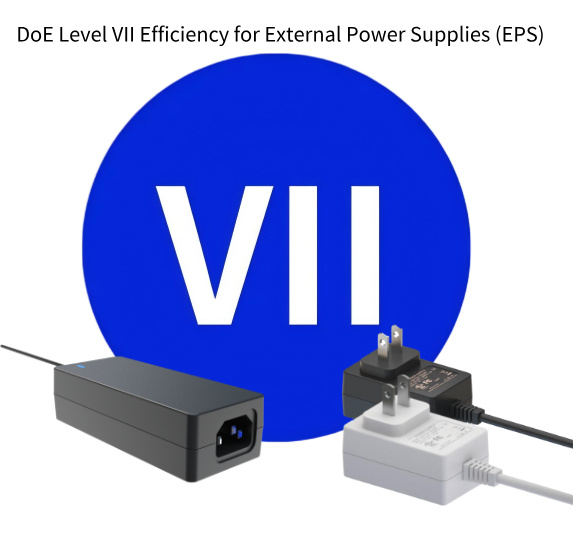
Understanding DoE Level VII Efficiency for External Power Supplies (EPS)
Level VII Efficiency for External Power Supplies (EPS)
The Next Frontier in Energy Savings
What is Level VII?
Level VII is the proposed next tier of mandatory energy-efficiency standards for External Power Supplies (EPS) in the United States, as set forth by the U.S. Department of Energy (DOE). It is designed to replace the current Level VI standards, which have been in effect since 2016. Level VII aims to drastically reduce energy waste from power adapters, which are used in billions of electronic devices worldwide.
Key Objectives
- Reduce Standby (No-Load) Power Consumption – The primary focus is to cut the power drawn by an EPS when it’s plugged in but not actively powering a device (e.g., a phone charger left in the outlet overnight).
- Improve Active-Mode Efficiency – Ensure more of the AC input power is converted to usable DC output during operation, reducing heat loss.
- Lower National Energy Use & Carbon Emissions – By improving efficiency across millions of power supplies, the standard aims to significantly cut U.S. electricity consumption and greenhouse gas emissions.
- Align with Global Standards – Harmonize U.S. regulations with international norms (e.g., EU CoC Tier 2, China standards) to simplify global manufacturing.
Proposed Technical Requirements
While still in the rulemaking phase, key expected changes compared to Level VI include:
| Parameter | Level VI (Current) | Level VII (Proposed) |
|---|---|---|
| No-Load Power | 0.100–0.210 W (depending on output power) | As low as 0.010 W (10 mW) for low-power EPS |
| Active-Mode Efficiency | Minimum efficiency curves based on output power | Stricter curves, requiring higher efficiency across all loads |
| Scope | Covers AC-DC and AC-AC EPS, ≤ 250 W output | Expected to cover similar power range, including battery-charging EPS |
- Les 10 mW no-load limit is a dramatic reduction—up to 90% lower than some Level VI limits.
- Efficiency improvements will likely require advanced power-conversion topologies (e.g., resonant switching designs).
Timeline & Status
- 2023: DOE issued a Notice of Proposed Rulemaking (NOPR) and gathered stakeholder feedback.
- 2024–2025: Final rule development, with further analysis on technical feasibility and economic impact.
- Expected Effective Date: If finalized, manufacturers would likely have 3–5 years to comply—potentially 2028–2030.
Impact
For Consumers:
- Lower Energy Bills – Reduced “vampire” power waste from idle chargers.
- Possible Price Increase – More efficient designs may raise upfront costs slightly.
- Fewer Low-Quality Chargers – Non-compliant, inefficient models may disappear from the U.S. market.
For Manufacturers:
- Redesign Required – Most existing EPS models will need hardware revisions.
- Increased R&D and Component Costs – Likely use of more advanced ICs, better magnetics, and tighter manufacturing controls.
- Global Product Alignment – May streamline designs for markets with similar high standards.
For the Environment:
- Projected significant reduction in U.S. electricity use (millions of kWh saved annually).
- Lower associated carbon emissions from power generation.
Industry & Regulatory Context
- Complementary Trends:
- USB-C & PD – Universal chargers reduce the number of EPS needed per household.
- Right-to-Repair & Universal Charger Mandates – Policies (especially in the EU) pushing for common charging interfaces.
- Global Standards – The EU’s Code of Conduct (CoC) Version 2 et ErP regulations are moving in a similar direction, pushing no-load limits toward 10 mW.
Challenges & Considerations
- Technical Hurdles – Achieving 10 mW no-load power is challenging, especially for higher-power adapters and those with multiple outputs.
- Cost vs. Benefit – DOE must prove that long-term energy savings justify potential increases in unit cost.
- Enforcement & Verification – Ensuring compliance through testing and certification (e.g., DOE certification, FTC labeling).
Conclusion
Level VII Efficiency represents a major step forward in energy conservation for one of the most common electronic accessories. By pushing the limits of no-load and active-mode efficiency, it aims to eliminate wasted “phantom” energy on a national scale, saving consumers money, reducing environmental impact, and driving innovation in power-supply design.
Final Rule Expected: 2025–2026
Likely Compliance Date: 2028–2030
Stay updated via the DOE’s Appliance Standards Program.

A propos de l'auteur

Postes connexes

Choosing the right voltage for your power supply is a critical decision that affects performance, safety, and longevity of your electronic systems. While it may... Poursuivre la lecture
Power isn’t just an afterthought for your robot—it’s its lifeblood. Selecting the correct battery charger and power cord is one of the most critical, yet... Poursuivre la lecture
A high-performance CPU, a powerful GPU, fast storage—these are the components that capture our attention when building or upgrading a system. Yet, the component that... Poursuivre la lecture
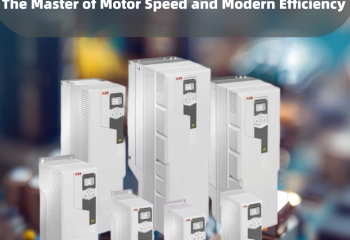
In the vast landscape of industrial automation, we often celebrate the “brains” of the operation—the controllers and computers that make decisions. However, the true “muscle”... Poursuivre la lecture
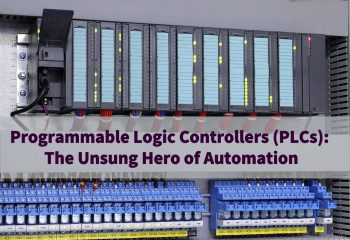
If you’ve ever wondered what keeps modern factories running smoothly, the answer is simple: Programmable Logic Controllers (PLCs) . These rugged industrial computers have been the foundation... Poursuivre la lecture





Ajouter un commentaire