








US and EU Standards for Power Supplies: A Comparative Guide
Introduction: Navigating the Regulatory Landscape
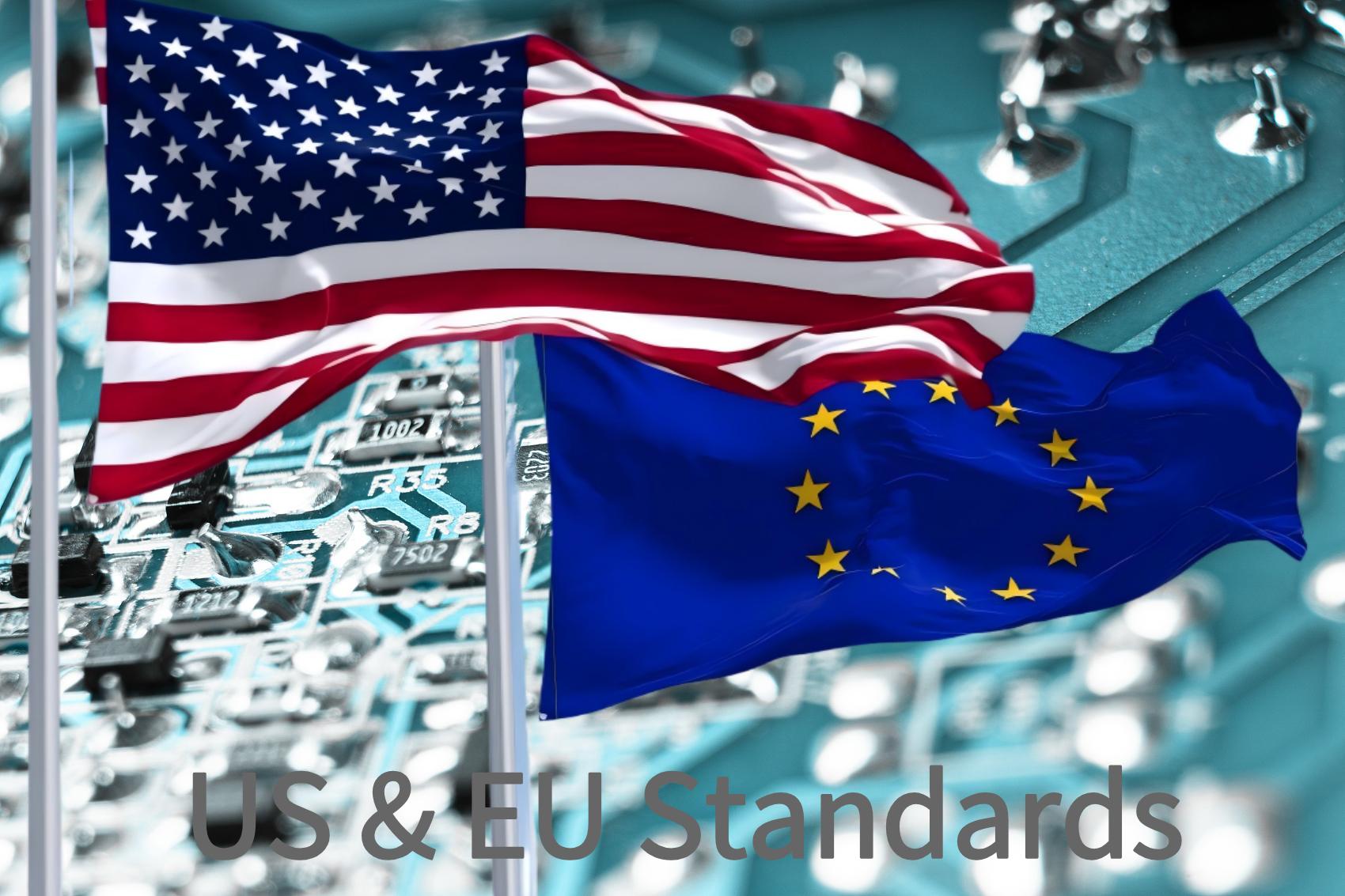
In today’s global electronics market, understanding and complying with international standards is essential for product success. The United States and European Union maintain distinct regulatory frameworks governing power supply design, safety, and performance. Navigating these requirements can be complex, but essential for market access. This guide provides a comprehensive comparison of US and EU standards for power supplies, helping engineers and manufacturers design products that meet requirements for both markets.
The Foundation: Understanding Standards vs. Directives
US Regulatory Structure
The United States employs a voluntary standards system where industry groups develop technical standards, while federal agencies enforce mandatory regulations.
Key Organizations:
- Underwriters Laboratories (UL): Private safety certification company
- National Electrical Manufacturers Association (NEMA): Industry association
- Federal Communications Commission (FCC): Government agency for electromagnetic compatibility
- Department of Energy (DOE): Energy efficiency regulations
EU Regulatory Structure
The European Union uses a harmonized standards system where EU directives establish essential requirements, and European harmonized standards provide presumptive conformity.
Key Framework:
- EU Directives: Legal requirements (e.g., Low Voltage Directive)
- EN Standards: European Norm standards developed by CENELEC
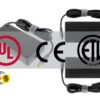
- CE Marking: Manufacturer’s declaration of conformity
- Notified Bodies: Independent organizations for certain product categories
Safety Standards Comparison
Information Technology Equipment (ITE)
| Standard | United States | European Union |
|---|---|---|
| Current | UL 62368-1 | EN 62368-1 |
| Previous | UL 60950-1 (phased out) | EN 60950-1 (phased out) |
| Scope | Audio/video, information and communication technology equipment | Same scope, harmonized under Low Voltage Directive |
| Key Differences | May have national differences (NDs) | Identical technical content, different foreword/national annex |
| Certification Body | UL, Intertek, TÜV Rheinland, etc. | Notified Bodies for EU market |
Important Note: Both regions have adopted IEC 62368-1, but implementation timelines and national differences exist.
Medical Equipment
| Standard | United States | European Union |
|---|---|---|
| Primary | ANSI/AAMI ES60601-1 | EN 60601-1 |
| Collateral | 60601-1-XX series | EN 60601-1-XX series |
| Regulatory Body | FDA (Food and Drug Administration) | EU Medical Device Regulation (MDR) |
| Key Requirements | – FDA submission requirements – UL certification common – Focus on risk management | – CE marking required – Notified Body assessment for higher classes – Clinical evaluation |
| Leakage Current | Same technical limits but different testing requirements | Stricter patient leakage current limits in some applications |
Industrial Equipment
| Standard | United States | European Union |
|---|---|---|
| Primary | UL 61010-1 | EN 61010-1 |
| Scope | Electrical equipment for measurement, control, and laboratory use | Same scope |
| Certification | UL mark or other NRTL certification | CE marking via EN 61010-1 |
| Specific Applications | Additional standards for particular environments (hazardous locations, etc.) | ATEX directive for explosive atmospheres |
Electromagnetic Compatibility (EMC) Standards
Emissions Standards
| Standard | United States | European Union |
|---|---|---|
| Regulatory Body | Federal Communications Commission (FCC) | European Commission (EMC Directive) |
| Residential Limits | FCC Part 15 Subpart B Class B | CISPR 32/EN 55032 Class B |
| Commercial Limits | FCC Part 15 Subpart B Class A | CISPR 32/EN 55032 Class A |
| Testing Methods | ANSI C63.4 | CISPR 16 series |
| Marking/Labeling | FCC ID or Declaration of Conformity | CE marking |
Key Difference: The EU requires testing for both conducted and radiated emissions over the entire frequency range, while FCC has specific frequency bands and limits.
Immunity Standards
| Aspect | United States | European Union |
|---|---|---|
| Requirement | Generally not mandatory (except for specific sectors) | Mandatory under EMC Directive |
| Common Standards | IEC 61000-4 series (adopted voluntarily) | EN 61000-4 series |
| Typical Tests | – Electrostatic Discharge (ESD) – Electrical Fast Transient (EFT) – Surge – Radiated RF Immunity | Same tests, but mandatory compliance |
| Industry-Specific | Military, automotive, medical have specific requirements | Product family standards may specify immunity levels |
Energy Efficiency Standards
US Energy Efficiency Requirements
Department of Energy (DOE) Regulations:
- External Power Supplies: Regulated under 10 CFR Part 430
- Minimum Efficiency Levels: Based on output power
- No-Load Power Consumption: Limits for all power supplies
- Energy Star: Voluntary program with stricter requirements
- California Energy Commission (CEC): Often more stringent than federal requirements
Key US Programs:
- Energy Star for Computers (includes power supplies)
- 80 PLUS (voluntary certification for computer PSUs)
- CEC Appliance Efficiency Regulations
EU Energy Efficiency Requirements
Ecodesign Directive (2009/125/EC):
- External Power Supplies: Regulation (EU) 2019/1782
- Minimum Efficiency: Tier 2 requirements in effect
- No-Load Power: Strict limits based on output power
- Active-Mode Efficiency: Minimum requirements at 25%, 50%, 75%, 100% load
EU Energy Labeling:
- Voluntary for power supplies (mandatory for end products)
- Scale A-G (revised)
- Product Registration in EPREL database
Comparison of Efficiency Requirements:
| Parameter | US (DoE Level VI) | EU (Ecodesign Tier 2) |
|---|---|---|
| Active-Mode Efficiency | Similar requirements but different calculation methods | Slightly more stringent at low loads |
| No-Load Power | 0.1W for ≤ 1W output; 0.21W for > 1W and ≤ 49W; etc. | 0.075W for ≤ 1W; 0.15W for > 1W and ≤ 49W; etc. |
| Effective Date | February 2016 | April 2020 |
| Harmonization | Internationally aligned but not identical | Aligned with international standards |
Environmental and Material Restrictions
US Environmental Standards
Federal Regulations:
- No comprehensive federal RoHS equivalent
- State-level restrictions: California RoHS (SB 20/SB 50)
- EPA regulations on hazardous substances
- State-specific requirements: Washington, New York, others have varying rules
Voluntary Programs:
- EPEAT: Electronic Product Environmental Assessment Tool
- UL ECOLOGO: Multi-attribute sustainability certification
EU Environmental Directives
Mandatory Requirements:
- RoHS (Restriction of Hazardous Substances) Directive
- Limits 10 substances including lead, mercury, cadmium
- Applies to most electrical/electronic equipment
- Regular updates to restricted substances list
- REACH (Registration, Evaluation, Authorization of Chemicals)
- Applies to chemicals, including those in electronic products
- SVHC (Substances of Very High Concern) list
- Obligations for manufacturers and importers
- WEEE (Waste Electrical and Electronic Equipment) Directive
- Product take-back and recycling requirements
- Marking requirements (crossed-out wheeled bin)
- Registration and reporting obligations
- Battery Directive
- Restrictions on heavy metals
- Collection and recycling requirements
- Marking requirements
Market Access and Certification Processes
US Market Access
Paths to Compliance:
- NRTL Certification (Nationally Recognized Testing Laboratory)
- UL, Intertek (ETL), CSA, TÜV Rheinland, etc.
- Required for safety in most states
- Field labeling or factory inspection options
- FCC Certification or Declaration
- Certification: For intentional radiators, some unintentional radiators
- Declaration of Conformity: For most IT equipment
- Verification: For simplest devices
- Voluntary Certifications
- Energy Star
- 80 PLUS
- EPEAT
Timeline and Cost:
- Safety certification: 4-8 weeks, $3,000-$10,000+
- FCC testing: 2-4 weeks, $2,000-$8,000
- Total time to market: 8-16 weeks typically
EU Market Access
CE Marking Process:
- Identify applicable directives (Low Voltage, EMC, RoHS, etc.)
- Determine conformity assessment procedure
- Perform testing to harmonized standards
- Technical documentation preparation
- EU Declaration of Conformity
- Apply CE marking
Notified Body Involvement:
- Required for certain products (medical, hazardous environments)
- Optional for others but provides third-party validation
UKCA Marking (United Kingdom):
- Required for Great Britain market post-Brexit
- Similar requirements to CE marking
- Different responsible organizations
Timeline and Cost:
- Self-declaration route: 4-6 weeks, $5,000-$15,000
- Notified Body route: 8-12 weeks, $10,000-$30,000+
- Language requirements: Technical documentation in official EU language
Testing Laboratory Recognition
US Laboratory Accreditation
- OSHA NRTL Program: Recognizes safety testing laboratories
- NVLAP: National Voluntary Laboratory Accreditation Program
- A2LA: American Association for Laboratory Accreditation
- FCC-recognized laboratories for EMC testing
EU Laboratory Recognition
- Notified Bodies: For products requiring third-party assessment
- Accredited laboratories: EN ISO/IEC 17025 accreditation
- National accreditation bodies: UKAS (UK), DAkkS (Germany), COFRAC (France)
Design Considerations for Dual Compliance
Electrical Design
- Input Voltage Range: Design for 85-265VAC to cover both regions
- Plug and Connector Options: Consider global plug compatibility
- Overcurrent Protection: Meet requirements of both UL and EN standards
- Isolation Requirements: Design to highest required isolation voltage
Mechanical Design
- Creepage and Clearance: Design to most stringent requirements
- Enclosure Requirements: Consider both regions’ accessibility requirements
- Marking and Labeling: Include all required markings for both markets
- Instruction Manuals: Prepare versions for different languages/regions
Documentation Requirements
- US Requirements: Detailed testing reports, compliance certificates
- EU Requirements: Technical construction file, EU DoC, risk assessment
- Language: English typically sufficient for US; EU requires local languages
- Retention Period: 10+ years for EU technical documentation
Recent Updates and Future Trends
US Regulatory Developments
- UL 62368-1 transition: Complete adoption of new safety standard
- DOE efficiency updates: Regular tightening of efficiency requirements
- FCC modernization: Updates to EMC requirements and processes
- State-level regulations: Increasing patchwork of state requirements
EU Regulatory Updates
- EU Medical Device Regulation (MDR): Replaced Medical Device Directive
- Ecodesign Working Plan 2022-2024: New product groups under consideration
- Digital Product Passport: Proposed for better sustainability information
- Circular Economy Action Plan: Focus on repairability and recyclability
Harmonization Efforts
- IECEE CB Scheme: Mutual recognition of test reports among member countries
- US-EU Mutual Recognition Agreement: Limited scope for certain products
- International Standards Development: Increasing global alignment through IEC
Practical Implementation Strategies
Strategy 1: Design for Global Compliance
- Select components with global approvals
- Implement most stringent requirements from all target markets
- Document design decisions for multiple standards
- Consider modular design for region-specific requirements
Strategy 2: Phased Market Entry
- Design to primary market requirements first
- Plan for modifications for secondary markets
- Budget for additional testing and certification
- Consider timing of regulatory changes
Strategy 3: Partner with Experts
- Engage with global test laboratories
- Work with consultants familiar with both US and EU systems
- Partner with local representatives in target markets
- Leverage manufacturer’s declarations for components
Case Study: Power Supply for Medical Monitoring Equipment
Requirements:
- Market: US and EU
- Application: Patient-connected medical device
- Power: 100W, multiple outputs
Compliance Approach:
- Safety: Designed to EN 60601-1 with attention to US national differences
- EMC: Tested to both FCC Part 15 and EN 60601-1-2
- Efficiency: Meets both DOE Level VI and EU Ecodesign Tier 2
- Materials: Complies with EU RoHS and California RoHS
- Certification: UL 60601-1 for US, CE marking with Notified Body for EU
Challenges and Solutions:
- Leakage current differences: Designed to most stringent requirement
- Documentation requirements: Created combined technical file with region-specific annexes
- Labeling requirements: Used dual-language labels with all required markings
- Testing schedule: Coordinated testing to avoid duplication where possible
Conclusion: Navigating the Dual Compliance Landscape
Successfully bringing power supplies to both US and EU markets requires careful planning, thorough understanding of requirements, and strategic design decisions. Key takeaways include:
- Start Early: Consider regulatory requirements during initial design phase
- Design for the Most Stringent: Meet the toughest requirements of all target markets
- Document Everything: Maintain comprehensive records for both regions
- Plan for Updates: Regulatory requirements evolve continuously
- Budget Realistically: Certification costs can be significant but are essential for market access
While US and EU standards continue to converge through international harmonization efforts, important differences remain. By understanding these differences and planning accordingly, manufacturers can efficiently design products that meet requirements for both markets, reducing time-to-market and maximizing global opportunities.
The most successful approach combines technical excellence with regulatory intelligence—designing products that not only perform well but also navigate the complex landscape of international compliance with confidence.
Important Note: This guide provides general information about US and EU standards. Regulations change frequently, and specific product requirements may vary. Always consult with qualified regulatory experts and review the latest official regulations before making design or compliance decisions.
關於作者




新增評論