











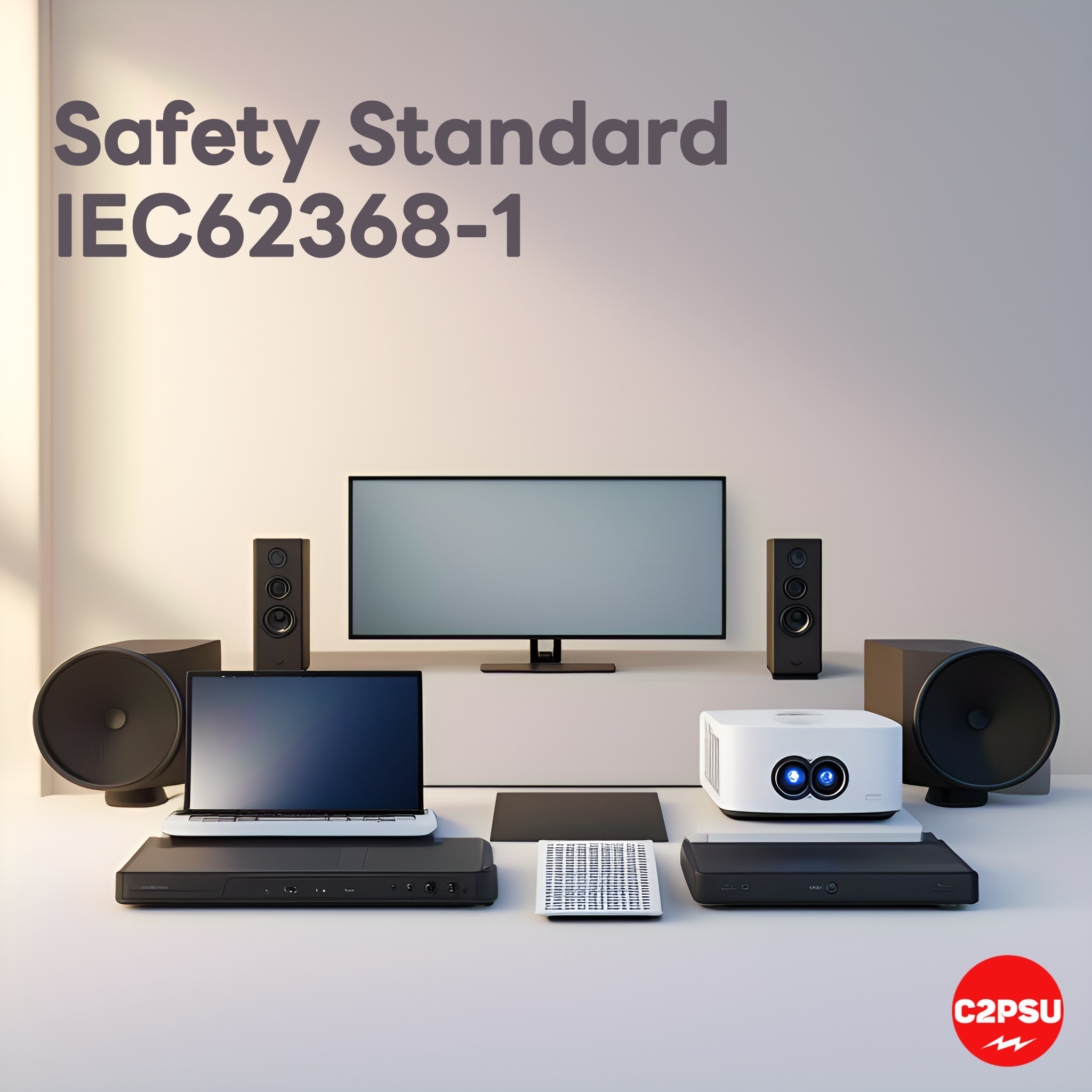
Understanding IEC 62368-1: The Modern Safety Standard for IT and AV Equipment
In the rapidly evolving landscape of information technology and audio-visual equipment, safety standards must keep pace with innovation while ensuring user protection. IEC 62368-1 has emerged as the globally recognized safety standard that replaces legacy approaches with a forward-thinking, hazard-based philosophy. At C2PSU, we design our power solutions to not only comply with but exceed the requirements of this critical standard, ensuring our products integrate seamlessly into the safest ITE and AV systems.
The Evolution: From Prescriptive to Performance-Based
IEC 62368-1 represents a fundamental shift in safety philosophy, moving away from the prescriptive rules of its predecessors (IEC 60950-1 for IT equipment and IEC 60065 for AV equipment) toward a hazard-based safety engineering (HBSE) approach.
Key Transformations:
- Unified Standard: Consolidates requirements for IT and AV equipment into a single, harmonized document
- Future-Proof Design: Addresses new technologies not envisioned in older standards
- Global Harmonization: Facilitates international compliance and market access
- Risk Management Focus: Emphasizes identifying and mitigating hazards rather than following rigid prescriptions
Core Principles of IEC 62368-1
The Energy Source Classification System
The standard introduces a revolutionary framework classifying energy sources based on their potential to cause injury:
| Energy Source Class | Characteristics | Safety Requirements |
|---|---|---|
| Class 1 (ES1) | Not painful, but may be detectable | Basic protection measures |
| Class 2 (ES2) | Potentially painful but not causing injury | Additional safeguards required |
| Class 3 (ES3) | Capable of causing injury | Comprehensive protection mandatory |
Practical Application: This classification allows manufacturers to apply appropriate safeguards based on the actual hazard level, rather than using one-size-fits-all solutions.
Hazard-Based Safety Engineering Process
The HBSE methodology follows a systematic approach:
- Identify energy sources within the equipment
- Classify energy sources into ES1, ES2, or ES3 categories
- Determine safeguards needed based on energy classification
- Implement protective measures to prevent hazardous situations
- Verify effectiveness through testing and documentation
Key Technical Requirements and Innovations
Electrical Safety Enhancements
- Touch Current Limits: Stricter requirements for accessible parts
- Overvoltage Protection: Enhanced requirements for power supply inputs and outputs
- Battery Safety: Comprehensive coverage for emerging battery technologies
- Component Requirements: Updated specifications for capacitors, transformers, and isolation barriers
Fire and Mechanical Safety
- Fire Enclosure Requirements: Improved material flammability classifications
- Overheating Prevention: Advanced thermal protection requirements
- Mechanical Hazards: Protection against moving parts, sharp edges, and instability
- Laser Safety: Updated classifications and protective measures
New Technology Coverage
- Power over Ethernet (PoE): Specific safety requirements for PoE equipment
- External Power Supplies: Enhanced safety for power adapters and chargers
- Audio/Video Interfaces: Safety considerations for HDMI, USB, and other modern interfaces
- Wireless Power Transfer: Requirements for inductive charging systems
Implementation Timeline and Global Adoption
Transition Phases:
- Phase 1 (Initial Publication): IEC 62368-1 first edition published in 2010
- Phase 2 (Harmonization): Second edition (2014) and third edition (2018) refined requirements
- Phase 3 (Global Mandate): Most regions now require compliance, with full enforcement by 2020
Regional Adoption Status:
- Europe: EN 62368-1 mandatory for CE marking
- United States: UL 62368-1 recognized by OSHA
- 加拿大: CSA C22.2 No. 62368-1 accepted
- International: Widely adopted across global markets
C2PSU’s Proactive Compliance Strategy
Design Integration from Concept
At C2PSU, IEC 62368-1 compliance begins at the earliest design stages:
- Hazard Analysis Workshops: Systematic identification of potential energy sources
- Safety by Design: Integration of safeguards into initial product architecture
- Component Selection: Choosing parts with established safety records and certifications
- Documentation Management: Comprehensive safety case development throughout design
Certification and Testing Excellence
Our commitment to safety includes:
- Third-Party Certification: All products certified by accredited testing laboratories
- Complete Test Coverage: Testing for all applicable clauses of IEC 62368-1
- Environmental Testing: Verification under extreme operating conditions
- Long-Term Reliability: Extended testing to ensure ongoing compliance
Specific C2PSU Implementation Features
Enhanced Electrical Protection
- Multiple Protection Layers: Redundant safeguards for critical energy sources
- Advanced Isolation: Exceeding minimum creepage and clearance requirements
- Touch Current Optimization: Designing for significantly lower leakage currents than required
- Overload Resilience: Robust protection against abnormal operating conditions
Thermal and Fire Safety
- Intelligent Thermal Management: Active monitoring and control of temperature
- Material Selection: Using highest-grade flammability-rated components
- Fire Containment: Designs that prevent fire spread beyond the unit
- Fault Tolerance: Continued safe operation during component failures
Mechanical Safety Innovations
- Secure Enclosures: Tool-less designs that prevent unintended access
- Stability Engineering: Center of gravity optimization for rack-mounted units
- Cable Management: Secure strain relief and routing to prevent hazards
- Warning Systems: Clear, multilingual safety labeling and indicators
The Business Impact of Compliance
Market Access and Competitive Advantage
- Global Market Reach: Single certification for international distribution
- Reduced Time-to-Market: Streamlined compliance for new product introductions
- Enhanced Brand Reputation: Demonstrated commitment to safety and quality
- Reduced Liability: Lower risk of safety-related incidents and recalls
Cost Management Benefits
- Standardized Testing: Reduced compliance testing costs over product lifecycle
- Future-Proof Design: Lower re-engineering costs for new technologies
- Supply Chain Efficiency: Consistent requirements across product families
- Insurance Advantages: Potential for reduced liability insurance premiums
Implementation Challenges and Solutions
Common Compliance Obstacles
- Interpretation Complexity: HBSE principles require different thinking than prescriptive standards
- Documentation Requirements: More extensive safety case documentation needed
- Testing Complexity: Some tests require specialized equipment and expertise
- Transition Costs: Upfront investment in training and process changes
C2PSU’s Support Framework
- Expert Guidance: Access to certified safety engineers
- Training Programs: Comprehensive staff education on HBSE principles
- Testing Partnerships: Relationships with leading certification bodies
- Documentation Templates: Streamlined safety case development tools
Future Developments and Evolution
Ongoing Standard Updates
- Fourth Edition Considerations: Anticipating further refinements and clarifications
- New Technology Annexes: Addressing emerging technologies as they develop
- Global Harmonization: Continued alignment with regional requirements
C2PSU’s Forward-Looking Approach
- Active Standards Participation: Contributing to standards development committees
- Technology Forecasting: Early adoption of requirements for new power technologies
- Continuous Improvement: Regular review and enhancement of safety processes
- Customer Education: Helping clients understand and implement safety requirements
Practical Implementation Guide for Manufacturers
Step-by-Step Compliance Process
- Gap Analysis: Compare existing products against IEC 62368-1 requirements
- Training and Preparation: Educate engineering and quality teams
- Design Review: Evaluate new designs against hazard-based principles
- Testing Strategy: Develop comprehensive test plans
- Certification Planning: Schedule with recognized testing laboratories
- Documentation Preparation: Compile complete technical documentation
- Production Control: Implement manufacturing process controls
- Ongoing Surveillance: Maintain compliance through production lifecycle
Key Documentation Requirements
- Risk Assessment Reports: Detailed hazard analysis documentation
- Technical Construction File: Complete product design documentation
- Test Reports: Certified laboratory test results
- User Instructions: Safety information and warnings
- Declaration of Conformity: Official compliance statement
Conclusion: Safety as a Strategic Priority
IEC 62368-1 represents more than just a regulatory requirement—it embodies a modern, intelligent approach to product safety that aligns with today’s technological landscape. By focusing on hazards rather than prescriptions, it enables innovation while ensuring protection.
At C2PSU, we view IEC 62368-1 compliance as a fundamental component of our product excellence philosophy. Our commitment extends beyond mere certification to creating power solutions that embody the highest safety principles, providing our customers with confidence, reliability, and peace of mind.
Choose C2PSU for Power Solutions Engineered for Safety First.
*Contact our compliance engineering team for guidance on integrating IEC 62368-1 compliant power solutions into your ITE or AV equipment.*
關於作者









新增評論