











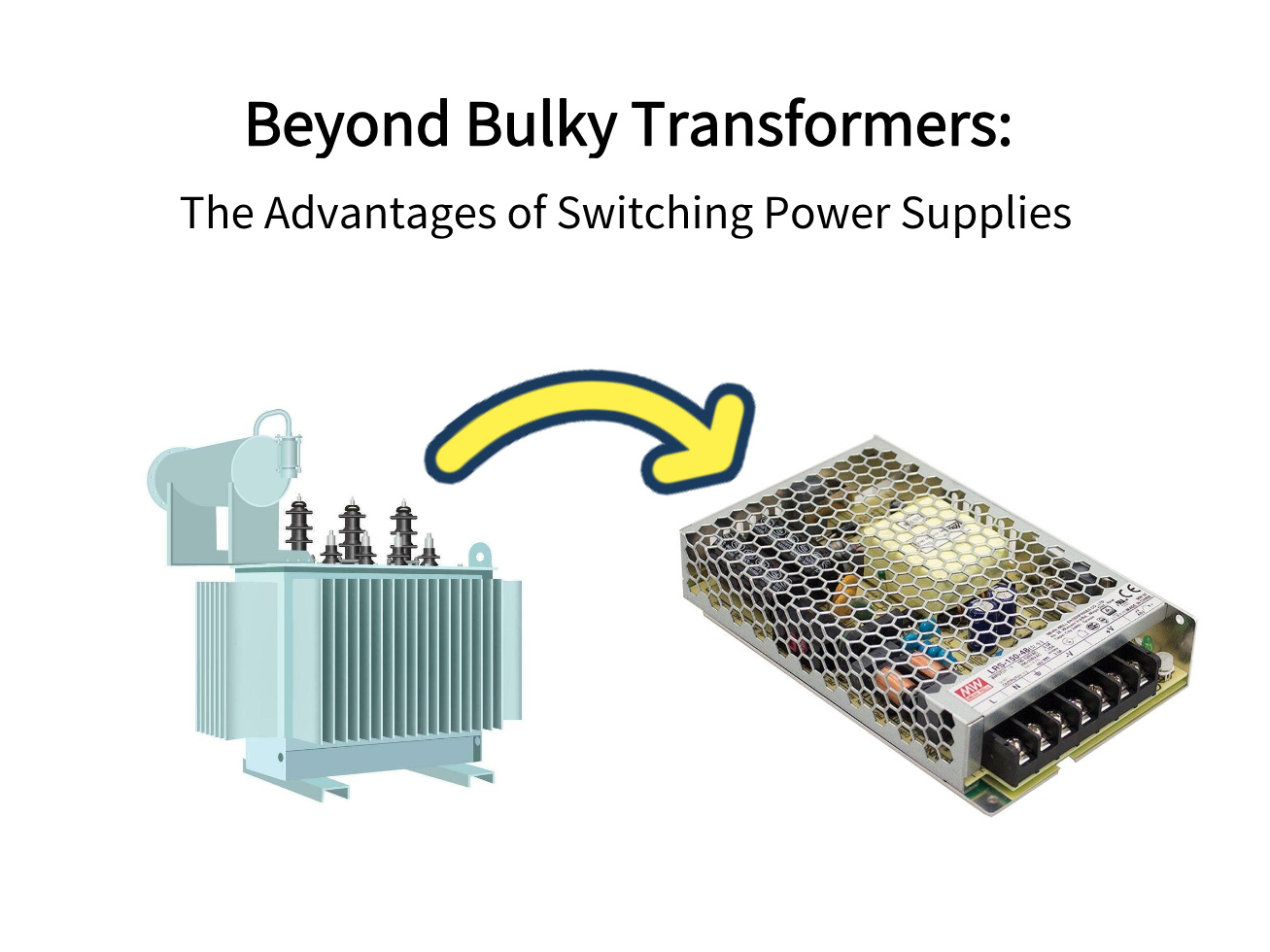
Beyond Bulky Transformers: The Advantages of Switching Power Supplies
For decades, the image of power conversion was dominated by the heavy, humming, and heat-producing linear power supply. At its heart sat a bulky iron-core transformer, a robust but inefficient workhorse. Today, a silent revolution powers our world, enabling everything from sleek laptops to powerful data centers. This revolution is built on Switching Mode Power Supply (SMPS) technology.
So, what sets a switching power supply apart, and why has it become the undisputed champion of modern electronics? Let’s dive into the core advantages that moved us beyond bulky transformers.
The Core Difference: Linear vs. Switching
To appreciate the “switching” advantage, a quick comparison is essential:
- Linear Power Supplies: Operate in a simple, analog manner. They use a large transformer to step down AC voltage, then rectify and regulate it to DC. The regulator acts like a “smart resistor,” dissipating excess voltage as waste heat. This process is simple and provides very “clean” power but is inherently inefficient (typically 40-60%), large, and heavy.
- Switching Power Supplies: Use a sophisticated, high-frequency process. They first rectify AC input to high-voltage DC. This DC is then rapidly “chopped” or switched on and off (at frequencies from tens of kHz to several MHz) by semiconductor transistors. This high-frequency AC is stepped down by a tiny, lightweight ferrite-core transformer, then rectified back to smooth DC output. This rapid switching, controlled by a feedback circuit, is the key to all its benefits.
The Key Advantages of Switching Power Supplies
1. Exceptional Efficiency (70-95%+)
This is the most significant advantage. Because the transistor switch is either fully on (low resistance) or fully off (high resistance), it spends minimal time in the power-dissipating transition state. Far less energy is wasted as heat. This translates to lower electricity bills, reduced thermal management needs, and longer product lifespan.
2. Compact Size and Light Weight
The efficiency advantage directly enables this. Higher switching frequency allows the use of a much smaller transformer and significantly smaller filter components (inductors and capacitors). An SMPS can be a fraction of the size and weight of a linear supply with the same power rating.
3. Flexible Voltage Handling & Wide Input Ranges
An SMPS can easily be designed to accept a wide range of input voltages (e.g., 90-264V AC, common in “universal” power supplies) and generate multiple, stabilized output voltages (e.g., +12V, +5V, +3.3V) from a single unit. This is invaluable for complex digital systems like computers.
4. Reduced Heat Generation
With higher efficiency comes dramatically less waste heat. This simplifies product design by minimizing the need for large heatsinks and fans, leading to quieter, more reliable, and more densely packed electronic devices.
5. Cost-Effectiveness at Scale
While the design is more complex, the use of smaller magnetic components, less copper, and less aluminum for heatsinks makes high-volume manufacturing of SMPS units very cost-competitive.
Trade-offs and Considerations
No technology is perfect, and switching supplies come with their own design challenges:
- Electrical Noise (EMI): The rapid switching creates high-frequency noise that can interfere with sensitive circuits. Careful design, filtering, and shielding are mandatory to meet electromagnetic compatibility (EMC) standards.
- Complexity: The design involves more components and requires careful layout to ensure stability and noise control.
- Potential for Output Ripple: The switching action can cause small residual AC ripple on the DC output, which may need additional filtering for noise-critical applications like audio amplifiers or precision sensors.
Where You’ll Find Them: Ubiquitous Applications
The advantages of SMPS have made them the default choice across industries:
- Consumer Electronics: Laptop chargers, phone adapters, gaming consoles, LED TVs.
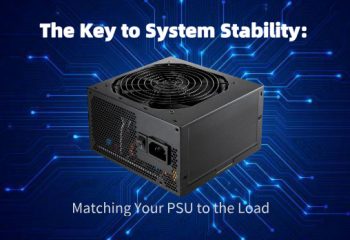
- Computing & IT: Desktop PC power supplies, server power modules, networking equipment (routers, switches).
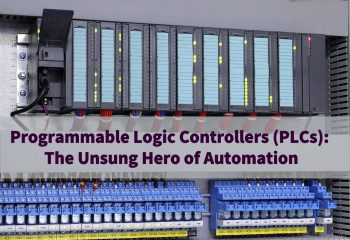
- Industrial & Telecom: PLC systems, motor drives, base station power.
- LED Lighting: Efficient LED drivers are essentially specialized switching power supplies.
- Renewable Energy: Critical in solar microinverters and charge controllers.
결론
The shift from linear to switching power supplies represents a fundamental leap in power conversion technology. By moving “beyond bulky transformers” and embracing high-frequency switching, engineers have unlocked unparalleled levels of efficiency, power density, and flexibility. While they demand careful design to manage noise, their overwhelming benefits are why they sit, unseen and efficient, at the heart of nearly every modern electronic device that plugs into a wall, powering our world smarter, lighter, and cooler.
Looking for a reliable, efficient power solution for your next project? Understanding the advantages of SMPS technology is the first critical step in selecting the right power supply for your application.
작성자 정보








댓글 추가