











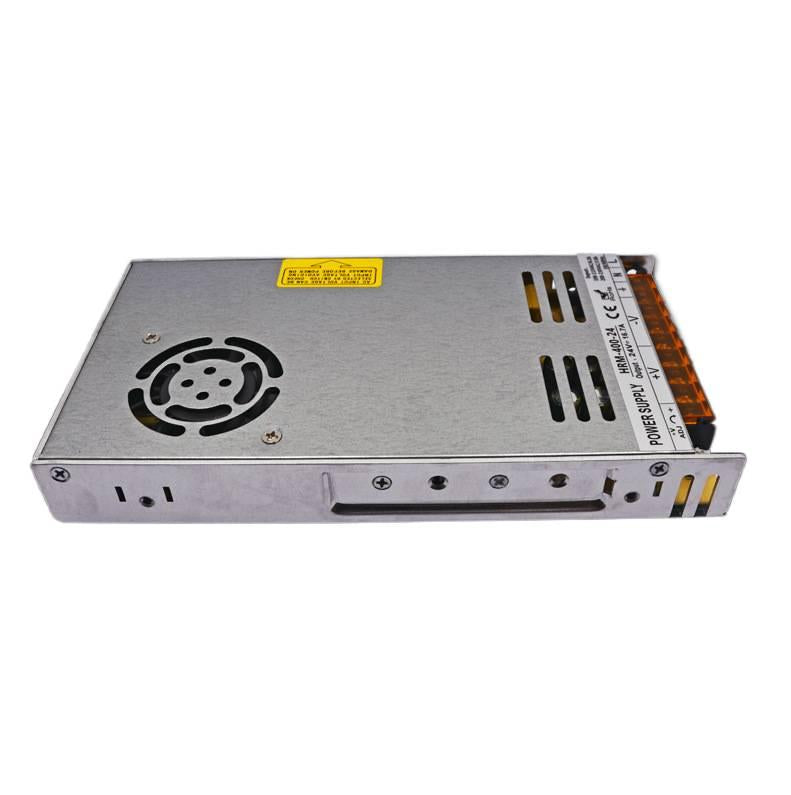
スイッチング電源とは?
スイッチング電源とは?
In our modern, technology-driven world, nearly every electronic device—from your smartphone and laptop to industrial machinery and data centers—requires a reliable and efficient power source. Among the various power conversion technologies available, the スイッチング電源 (SMPS) has emerged as the dominant solution, powering the vast majority of today’s electronics. But what exactly is it, and why has it become so ubiquitous?
Understanding the Basics
A スイッチング電源 is an electronic power supply that efficiently converts electrical power from one form to another (e.g., from AC mains to low-voltage DC) using high-frequency switching regulation.
The key differentiator from older, linear power supplies is its method of operation. While a linear regulator acts like a “smart resistor,” dissipating excess voltage as heat to achieve the desired output, a switching power supply rapidly turns the input power on and off, controlling the energy flow to achieve precise voltage regulation with minimal energy waste.
How Does an SMPS Work? The “Switching” Principle
The operation of an SMPS can be broken down into four fundamental stages:
- Rectification & Input Filtering: The incoming AC mains voltage (e.g., 120V/230V AC) is first rectified to create a high-voltage DC signal. This DC is then smoothed by a large capacitor.
- High-Frequency Switching: This is the heart of the process. A semiconductor switch (like a MOSFET) rapidly turns this DC voltage ON and OFF at a very high frequency—anywhere from 20 kHz to over 1 MHz. This creates a pulsed DC or square wave.
- Step-Down/Up Transformation: The high-frequency pulses are fed into a compact, high-frequency transformer. This transformer steps the voltage up or down to the required level. Because the switching frequency is so high, the transformer can be dramatically smaller and lighter than the bulky 50/60 Hz transformers used in linear supplies.
- Output Rectification & Filtering: The transformed AC pulses from the transformer’s secondary side are rectified back to DC. Finally, an inductor and capacitor (LC filter) smooth these pulses into a clean, stable, low-ripple DC output voltage.
A control circuit constantly monitors the output voltage and adjusts the デューティ・サイクル (the ratio of ON time to OFF time) of the switching signal to maintain a perfectly stable output, even if the input voltage or output load changes.
Key Advantages: Why SMPS Reigns Supreme
- High Efficiency (70-95%+): By minimizing heat dissipation through switching, SMPS units waste far less energy as heat compared to linear supplies (often 30-60% efficient). This reduces electricity costs, thermal stress, and the need for large heatsinks.
- Compact Size & Light Weight: The high-frequency operation allows for the use of tiny transformers and smaller filter components, leading to significantly smaller and lighter power adapters and internal power supplies.
- Wide Input Voltage Range: Many SMPS designs can automatically operate on a wide range of AC inputs (e.g., 90V-264V AC), making them ideal for global products and unstable power grids.
- Flexibility: SMPS technology can easily be designed for step-down (buck), step-up (boost), or even voltage-inversion applications with high efficiency.
一般的なアプリケーション
You interact with switching power supplies every day:
- Consumer Electronics: Laptop chargers, phone adapters, LED TVs, gaming consoles.
- Computing: Desktop PC power supplies, server PSUs, motherboard voltage regulators (VRMs).
- Industrial & Telecom: Factory automation equipment, networking routers, base stations.
- Lighting: LED drivers and ballasts.
SMPS vs. Linear Power Supply: A Quick Comparison
| 特徴 | Switching Power Supply (SMPS) | リニア電源 |
|---|---|---|
| 効率性 | High (70-95%+) | ロー(30-60%) |
| サイズ/重量 | Small, Light | Large, Heavy (due to big transformer/heatsink) |
| 発熱 | Low | High (significant heat dissipation) |
| 複雑さ | More complex design | シンプルで部品点数が少ない |
| Noise/EMI | Generates high-frequency noise | Very “clean,” low-noise output |
| コスト | Lower for high-power applications | Lower for very low-power, simple needs |
Note: The main drawback of SMPS is the generation of high-frequency electrical noise (EMI/RFI), which requires careful filtering and shielding to prevent interference with other electronic devices.
結論
The switching power supply is a cornerstone of modern electronics. Its unparalleled combination of efficiency, compactness, and flexibility has enabled the development of the portable, powerful, and energy-conscious devices we rely on. As technology continues to demand more power in smaller packages with higher efficiency, the evolution of SMPS technology will remain at the forefront of power electronics design.
For your next project requiring reliable and efficient power conversion, understanding the capabilities of a switching power supply is the first step toward an optimal solution.
著者について






コメントを追加