Nessun prodotto nel carrello.










Capire ETL, UL e CE: Guida alle certificazioni di sicurezza degli alimentatori
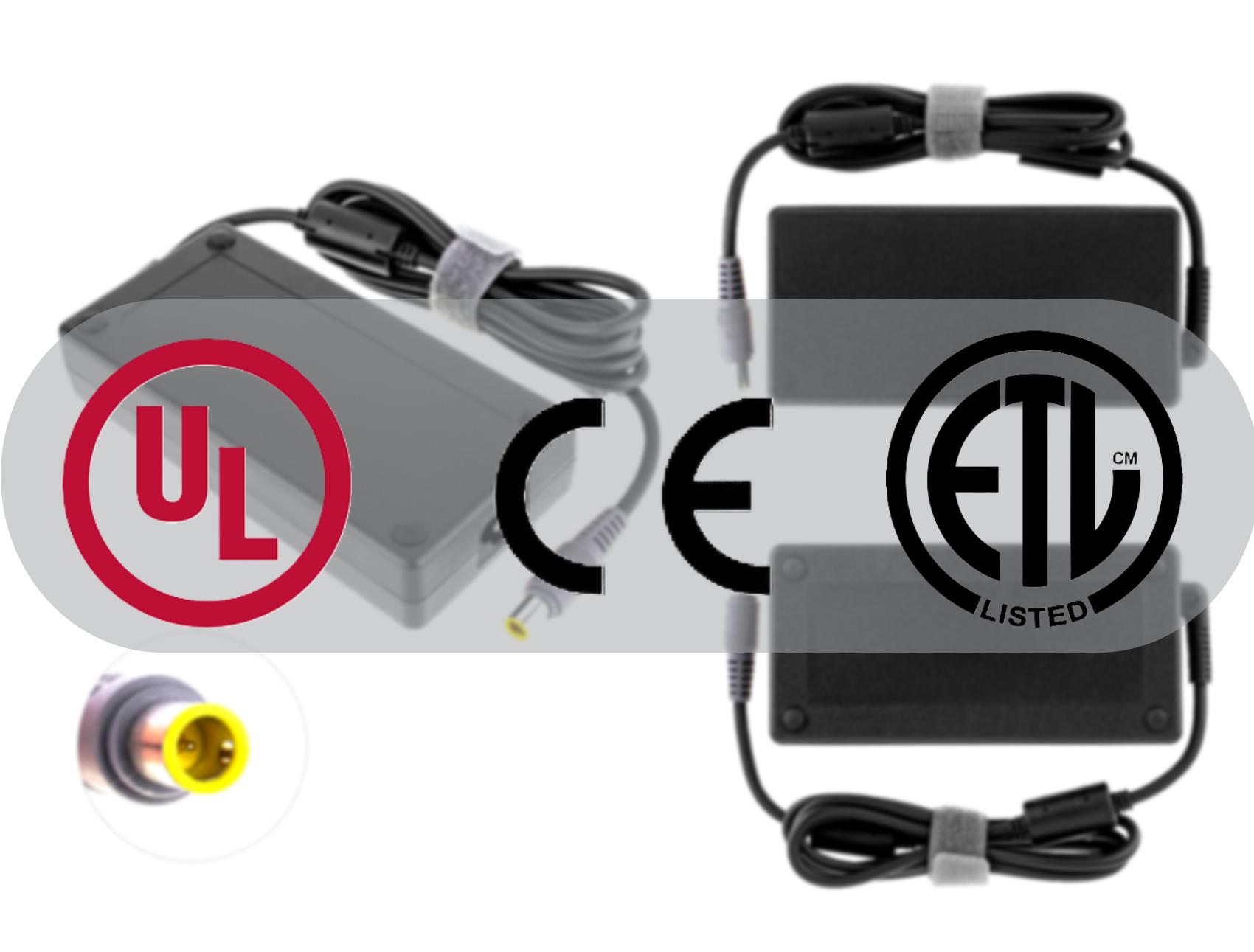
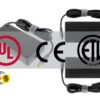
When selecting a power supply for your computer, gaming console, or industrial equipment, you’ll notice small logos like ETL, UL, and CE on the label. These certifications are far more than decorative stamps—they represent critical safety validations that protect you and your equipment from electrical hazards.
This guide explains what each certification means, how they differ, and why they matter for your next power supply purchase.
The Critical Role of Safety Certifications
Safety certifications exist because power supplies convert dangerous high-voltage AC power into lower-voltage DC power. Without proper design and testing, they can pose serious risks of:
- Electric shock
- Fire from overheating or short circuits
- Equipment damage from power surges
- Electromagnetic interference (EMI)
Certified power supplies have been independently tested to ensure they meet specific safety standards and won’t fail under normal or fault conditions.
ETL vs. UL vs. CE: What’s the Difference?
While these certifications all relate to safety, they serve different purposes and come from different organizations.
UL (Underwriters Laboratories)
- What it is: A global safety certification company founded in 1894, widely regarded as the most recognized safety standard in North America
- What it means: A UL mark indicates the power supply has been tested to specific U.S. safety standards (such as UL 60950-1 for IT equipment or UL 62368-1, the newer AV/IT equipment standard)
- Testing process: Rigorous evaluation of electrical components, insulation, temperature tolerance, and fire resistance
- Regional focus: Primarily North America, though UL certifies products globally
ETL (Intertek Testing Laboratories)
- What it is: A safety certification mark by Intertek, another OSHA-recognized Nationally Recognized Testing Laboratory (NRTL)
- Common misconception: Many believe ETL is inferior to UL, but this is incorrect
- Key fact: ETL tests products to the exact same safety standards as UL (e.g., UL 62368-1)
- Practical difference: Manufacturers may choose ETL for faster turnaround or lower cost, but the safety validation is equivalent to UL
- Look for: “ETL Listed” mark—not just “ETL Tested” which doesn’t carry the same weight
CE (Conformité Européenne)
- What it is: A mandatory conformity mark for products sold in the European Economic Area
- Important distinction: CE is not a safety certification like UL or ETL—it’s a manufacturer’s declaration that the product meets EU health, safety, and environmental requirements
- What it covers: Multiple EU directives including:
- Low Voltage Directive (LVD) for electrical safety
- Electromagnetic Compatibility (EMC) Directive
- Restriction of Hazardous Substances (RoHS) Directive
- Regional focus: Europe—products sold there must have CE marking
- Key consideration: Since manufacturers self-declare CE compliance, the level of independent verification varies
Certification Comparison Table
| Certification | Type | Testing Body | Legal Status | What It Guarantees |
|---|---|---|---|---|
| UL | Safety Certification | Underwriters Laboratories (third-party) | Recognized standard in North America | Product tested to specific UL safety standards |
| ETL | Safety Certification | Intertek (third-party) | Equivalent to UL in North America | Product tested to same UL standards as UL certification |
| CE | Conformity Mark | Manufacturer self-declaration (may involve third-party testing) | Required for sale in Europe | Manufacturer claims compliance with EU directives |
Why These Differences Matter for Your Purchase
For North American Users (USA/Canada):
- Prioritize UL or ETL certification—these ensure the power supply meets North American safety standards
- Don’t rely solely on CE marking—a CE-only power supply may not be designed for North American electrical systems or safety requirements
- Look for additional marks like cULus (combined U.S. and Canada certification) if using the equipment in Canada
For European Users:
- CE marking is mandatory—never purchase a power supply without it for use in Europe
- Consider additional certifications like TÜV, VDE, or BSI for extra assurance, as these involve third-party testing
- Be aware that some UL-certified products also meet CE requirements for transatlantic compatibility
For International/Global Applications:
- Look for power supplies with multiple certifications (e.g., UL + CE + other regional marks)
- Consider universal input power supplies (90-264V) with worldwide certifications for maximum flexibility
- Always verify the product is certified for your specific country’s voltage and plug type
How to Verify Authentic Certifications
- Check the product label for the actual certification mark—not just a mention in marketing materials
- Look for the certification number usually printed next to the logo (e.g., “UL E123456” or “ETL 789012”)
- Visit the certifier’s online database to verify the certification is current and valid
- Be wary of fakes—some products may display logos without proper certification
- Check for the correct terminology:
- UL or ETL “Listed” means fully certified
- “Recognized” means only certain components are certified
- “Tested” alone doesn’t equal full certification
Practical Recommendations
For Consumer Electronics:
- Choose power supplies with at least UL or ETL certification
- Replace lost/damaged chargers with certified replacements, not uncertified cheap alternatives
- Be especially cautious with high-wattage power supplies (like for gaming PCs) which carry greater risk if uncertified
For Business/Industrial Use:
- Require proper certifications in purchasing specifications
- Consider that certified power supplies may have better warranty support
- Remember that using uncertified power supplies may violate insurance policies or regulatory requirements
For Manufacturers and Resellers:
- Understand the certification requirements for your target markets
- Budget for certification costs—typically $5,000-$15,000+ per product model
- Factor in the 4-8 week typical timeline for certification testing
The Bottom Line
UL and ETL certifications provide the highest level of safety assurance through independent third-party testing to recognized standards. CE marking is a legal requirement for Europe but relies more on manufacturer self-declaration.
When selecting a power supply:
- Always choose certified products over uncertified alternatives
- Match the certification to your region (UL/ETL for North America, CE for Europe)
- Verify the certification is genuine through online databases when possible
- Remember that certification is an ongoing process—products can lose certification if manufacturing changes
By understanding these certifications, you can make informed decisions that prioritize safety, compliance, and reliability in your power supply choices.
About author

Related posts

Choosing the right voltage for your power supply is a critical decision that affects performance, safety, and longevity of your electronic systems. While it may... Continua a leggere
Power isn’t just an afterthought for your robot—it’s its lifeblood. Selecting the correct battery charger and power cord is one of the most critical, yet... Continua a leggere
A high-performance CPU, a powerful GPU, fast storage—these are the components that capture our attention when building or upgrading a system. Yet, the component that... Continua a leggere
In the vast landscape of industrial automation, we often celebrate the “brains” of the operation—the controllers and computers that make decisions. However, the true “muscle”... Continua a leggere
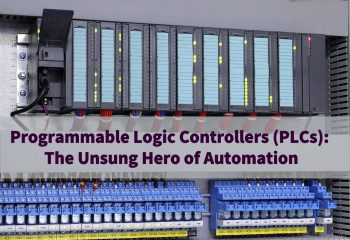
If you’ve ever wondered what keeps modern factories running smoothly, the answer is simple: Programmable Logic Controllers (PLCs) . These rugged industrial computers have been the foundation... Continua a leggere



Add comment