
Nessun prodotto nel carrello.











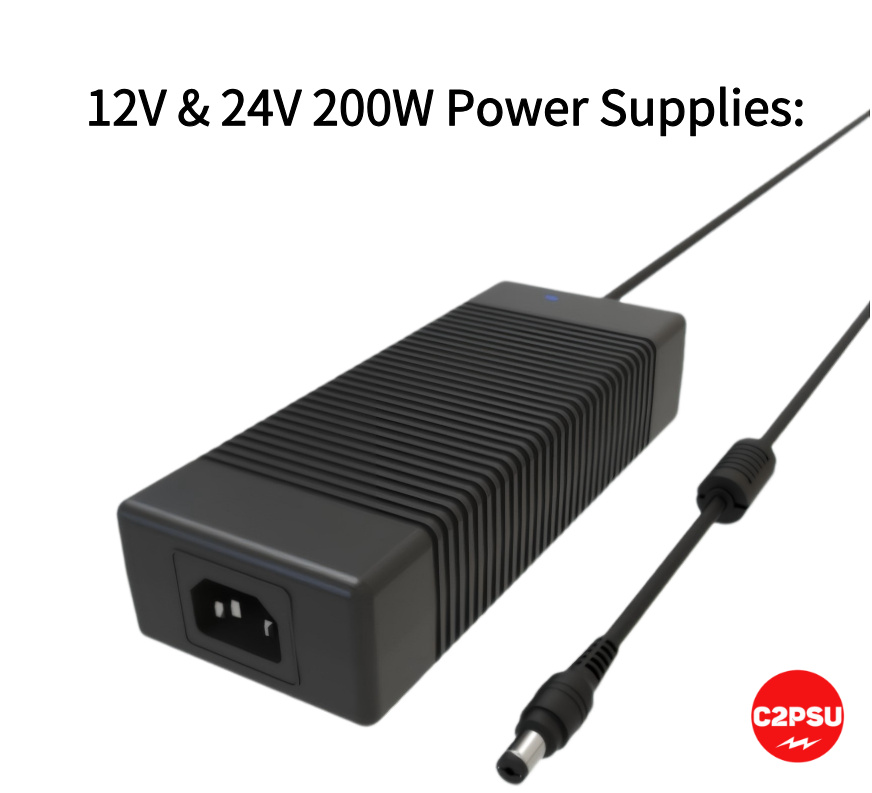
Alimentatori da 12V e 24V 200W: Potenza versatile per applicazioni esigenti
A robust and reliable 200-watt power supply is a cornerstone component for countless electronic systems, offering the perfect balance of power output and flexibility. The choice between 12V and 24V versions adds another layer of strategic decision-making. This article explores the capabilities, key differences, and primary applications of 12V and 24V 200W power supplies.
Core Specifications & Power Fundamentals
At the heart of any power supply selection are its fundamental electrical parameters:
- Rated Power: 200 Watts (W). This is the maximum continuous power the unit can deliver.
- Output Voltage Options: The two industry-standard DC voltages for this power tier.
- Output Current: Calculated from Power (P) = Voltage (V) x Current (I).
- For a 12V 200W model:
I = P / V = 200W / 12V ≈ 16.7 Amps - For a 24V 200W model:
I = 200W / 24V ≈ 8.3 Amps
- For a 12V 200W model:
This current difference is the single most important factor influencing your choice.
12V 200W vs. 24V 200W: A Comparative Analysis
Choosing between 12V and 24V isn’t just about matching a device’s input requirement; it’s about optimizing system efficiency, cost, and performance.
| Feature | 12V 200W Power Supply | 24V 200W Power Supply |
|---|---|---|
| Output Current | Higher (~16.7A) | Lower (~8.3A) |
| Wiring & Voltage Drop | More susceptible to voltage drop over long distances. Requires thicker gauge wires to carry high current without significant power loss and heat. | Less susceptible to voltage drop. Can use thinner, lighter, and more cost-effective wires for the same power delivery over distance. |
| Efficiency & Heat | Higher current typically leads to marginally higher conduction losses (I²R losses) in both the PSU’s internal circuitry and the external cabling, generating more heat. | Lower current reduces conduction losses, often leading to slightly better system-wide efficiency and less thermal stress. |
| Common Applications | Automotive/12V ecosystems, LED lighting arrays, car audio amplifiers, small server/network racks, some 3D printers. | Industrial automation (PLCs, motor controllers), professional LED stages, larger 3D printers (e.g., with 24V beds), security system hubs, telecommunications. |
| Compatibility | The standard voltage for a vast ecosystem of consumer car-audio, computing, and hobbyist components. | Often required for professional, industrial, and high-power hobbyist equipment where efficiency and cable runs are considerations. |
Key Technical Features to Look For
When selecting a 200W power supply, ensure it includes these critical features for reliability and safety:
- Regulation & Ripple: Look for tight voltage regulation (e.g., ±1%) and low ripple & noise. Clean, stable power is essential for sensitive electronics like amplifiers, radios, and microcontrollers.
- Protections: A quality unit must have:
- Over Voltage Protection (OVP)
- Over Current Protection (OCP)
- Short Circuit Protection (SCP)
- Over Temperature Protection (OTP)
- Cooling & Form Factor:
- Fan-Cooled: Provides robust cooling for sustained high-power operation but adds noise.
- Fanless (Convection Cooled): Silent operation, ideal for audio studios, offices, or living spaces. Requires adequate ventilation.
- Common form factors include enclosed desktop bricks and open-frame models for internal chassis mounting.
- Input Range: A wide AC input range (e.g., 90-264VAC, 47-63Hz) allows for global use and tolerance to unstable power grids.
- Efficiency Rating: An 80 Plus Bronze certification or higher indicates good energy efficiency, reducing electricity costs and heat generation.
- Safety Certifications: Always verify recognized marks like UL, ETL, CE, or RoHS, which ensure the product meets stringent safety and environmental standards.
Primary Application Areas
For the 12V 200W Power Supply:
- High-Power LED Installations: Driving large arrays of 12V LED strips for architectural, automotive, or signage lighting.
- Car Audio & Competition Systems: Powering multiple amplifiers, processors, and accessories in a vehicle or as a benchtop testing supply.
- Computer & Peripheral Power: Supporting mini-ITX/server builds, multi-disk external RAID enclosures, or network equipment racks.
- Hobby & Prototyping: A robust bench power source for electronics workshops, robotics projects, and RC battery charging (with proper regulation).
For the 24V 200W Power Supply:
- Industrial Control Systems: Powering Programmable Logic Controllers (PLCs), sensors, relays, and motor starters in automation cabinets.
- Professional 3D Printing: Ideal for printers with a large, power-hungry heated bed, as 24V systems heat faster and use thinner wires.
- Telecom & Networking: Powering edge routers, switches, and radio equipment in installations where -48V is not required.
- Advanced LED Systems: Used in professional theatrical, studio, or landscape lighting where long cable runs are necessary to minimize voltage drop.
- Motor Drives: Powering medium-sized DC motors, actuators, or linear drives in robotics and automation with better performance than 12V.
Selection Guide: Which One Do You Need?
Ask these questions to make the right choice:
- What does my device/load require? This is the first and most critical check. Never force a different voltage.
- What is the distance between the PSU and the load?
- Long runs (>10 feet/3 meters): A 24V system is superior due to reduced voltage drop and cheaper wiring.
- Short runs: 12V is often perfectly adequate and taps into a wider accessory ecosystem.
- Is noise a concern? For quiet environments, prioritize a fanless model, ensuring it has a sufficient heatsink for 200W dissipation.
- What is the operational environment? For industrial settings, look for rugged, enclosed designs. For indoor bench use, an open-frame or desktop model may suffice.
- Do I need future expandability? Consider if you might add more devices. Operating a PSU at 50-80% of its capacity (100-160W for a 200W unit) is ideal for efficiency and longevity.
Conclusion
Both the 12V and 24V 200W power supplies are indispensable tools in an engineer’s or hobbyist’s arsenal. The 12V model is your go-to for direct compatibility with the vast automotive and consumer 12V world. The 24V model is the smarter choice for professional, industrial, and any application where efficiency, cable length, and thermal performance are priorities.
By understanding the relationship between voltage, current, and power, and by selecting a unit with robust protections and certifications, you ensure a solid, reliable foundation for any project or system demanding substantial, clean DC power.

About author

Related posts

Choosing the right voltage for your power supply is a critical decision that affects performance, safety, and longevity of your electronic systems. While it may... Continua a leggere
Power isn’t just an afterthought for your robot—it’s its lifeblood. Selecting the correct battery charger and power cord is one of the most critical, yet... Continua a leggere
A high-performance CPU, a powerful GPU, fast storage—these are the components that capture our attention when building or upgrading a system. Yet, the component that... Continua a leggere
In the vast landscape of industrial automation, we often celebrate the “brains” of the operation—the controllers and computers that make decisions. However, the true “muscle”... Continua a leggere

If you’ve ever wondered what keeps modern factories running smoothly, the answer is simple: Programmable Logic Controllers (PLCs) . These rugged industrial computers have been the foundation... Continua a leggere






Add comment