
Aucun produit dans le panier.











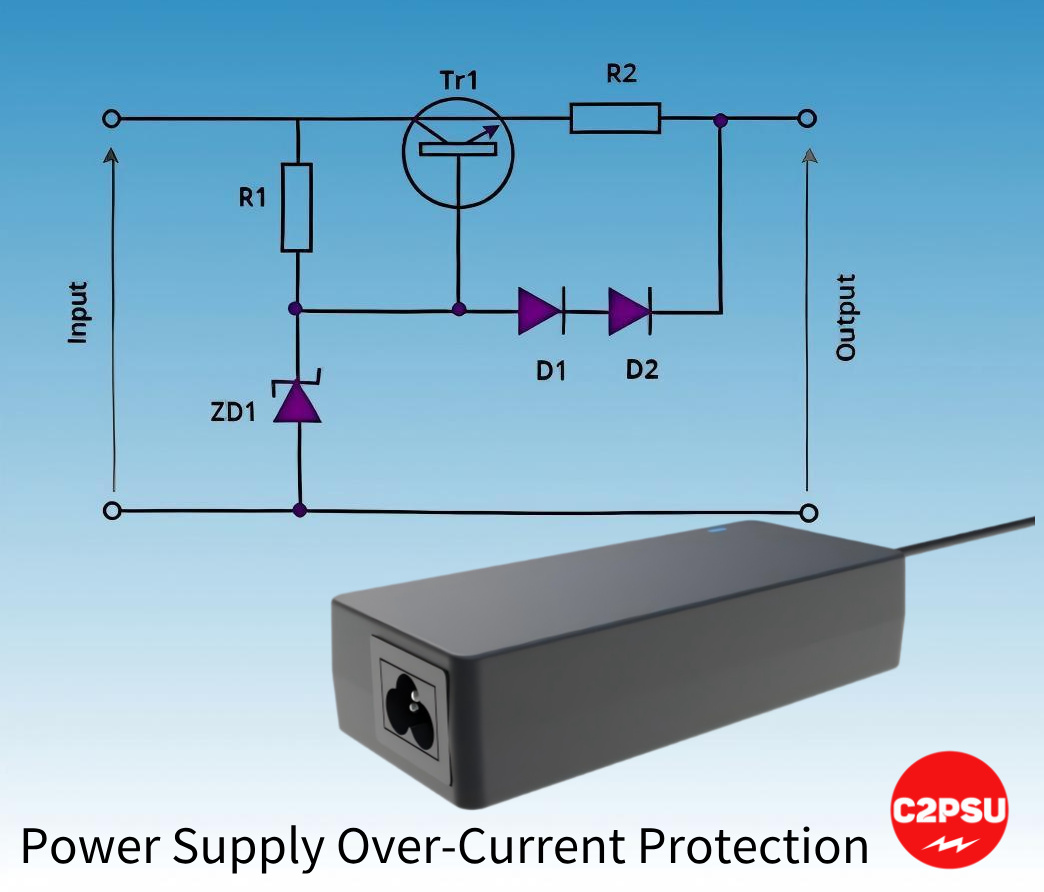
Power Supply Over-Current Protection Explained: Why It Matters and How It Works
Introduction: The Invisible Guardian
Every electronic device you own—from your smartphone to your laptop to your TV—contains a silent protector working tirelessly to prevent catastrophic failure. This guardian is Over-Current Protection (OCP), a fundamental safety system embedded in power supplies that monitors and controls electrical current flow. When functioning correctly, you’ll never notice it. When it activates, it’s often preventing smoke, fire, or permanent damage.
In this comprehensive guide, we’ll demystify over-current protection, exploring why it’s essential for modern electronics and explaining the various technologies that make it work.
What Exactly is Over-Current?
Before understanding the protection, we must understand the threat.
Electrical current is the flow of electrons through a circuit, measured in amperes (amps). Every component in an electronic device is designed to handle a specific current range. Over-current occurs when current exceeds this designed limit, creating a potentially dangerous situation.
Common Causes of Over-Current Conditions:
- Short Circuits: A direct, low-resistance connection between power and ground
- Excessive Load: Connecting too many or too powerful devices
- Component Failure: A malfunctioning part drawing abnormal current
- Incorrect Connections: Wiring mistakes during installation or repair
- Inrush Current: The temporary surge when devices first power on
Why Over-Current Protection Matters: Beyond Preventing Damage
1. Safety First: Preventing Fires and Injuries
Over-current generates heat—often excessive heat. According to safety standards, OCP is not optional; it’s mandatory in most commercial and consumer electronics. Without it, overheating wires and components can ignite surrounding materials or cause burns.
2. Equipment Longevity and Reliability
Consistent over-current degrades components prematurely. Capacitors dry out, circuit board traces delaminate, and semiconductors fail. OCP preserves your investment by preventing these slow-motion failures.
3. System Integrity
In complex systems (data centers, industrial controls), a single unprotected failure can cascade. Proper OCP isolates faults before they bring down entire systems.
4. Cost Savings
Repairing current-damaged electronics is often more expensive than replacing them. OCP reduces warranty claims, field failures, and liability issues.
How Over-Current Protection Works: The Technical Breakdown
OCP systems follow a consistent logical flow:
- Sense the current flowing through the circuit
- Compare it against a predetermined threshold
- Act to limit or interrupt the current if the threshold is exceeded
Let’s examine the primary implementation methods:
Method 1: The Simple Solutions
Fuses
The oldest and simplest form of OCP, fuses contain a thin metal strip designed to melt when current exceeds its rating.
How it works: Excessive current heats the fusible element until it physically separates, permanently breaking the circuit.
Best for: Cost-sensitive applications where faults are rare.
Limitation: One-time use only—must be replaced after operation.
Circuit Breakers
The mechanical evolution of the fuse, breakers can be reset after tripping.
How it works: Thermal breakers use a bimetallic strip that bends when heated by over-current, releasing a mechanical latch. Magnetic breakers use an electromagnet whose pull strengthens with current until it trips the mechanism.
Best for: Applications where occasional overloads are expected or where accessibility makes replacement difficult.
Limitation: Slower response than electronic methods; mechanical wear over time.
Method 2: Electronic Protection (The Modern Standard)
Most contemporary electronics use active electronic OCP, offering faster response and greater precision.
Current Limiting
Rather than completely shutting down, some circuits limit current to a maximum safe value.
Constant Current Limiting: When current reaches the threshold, the circuit reduces voltage to maintain current at the limit. Useful for protecting both supply and load during temporary overloads.
Foldback Current Limiting: A more aggressive approach that not only limits but reduces current to a very low level once triggered. Excellent for protection but can prevent some loads from restarting automatically.
Pulse-by-Pulse Current Limiting
Common in switching power supplies, this method checks current during each switching cycle (thousands of times per second).
How it works: A sensing circuit monitors the switching element (usually a MOSFET). If current exceeds the limit during any pulse, that pulse is immediately terminated. This provides microsecond-level protection—fast enough to save sensitive semiconductors.
Hiccup (Cyclic) Mode Protection
An intelligent approach for persistent faults.
How it works: When a sustained over-current is detected, the supply shuts down completely for several seconds, then attempts to restart. If the fault remains, it repeats this cycle. This prevents components from overheating during prolonged fault conditions while allowing automatic recovery if the fault clears.
Sensing Technologies: How Circuits “Measure” Current
All electronic OCP begins with accurate current measurement. Here are the common approaches:
| Sensing Method | How It Works | Meilleur pour | Trade-offs |
|---|---|---|---|
| Series Resistor | Measures voltage drop across a low-value resistor in the current path | Low-cost, low-to-medium current applications | Adds power loss; voltage drop affects circuit |
| Current Transformer | Uses magnetic induction to create an isolated proportional signal | High-current AC circuits; isolation requirements | Bulky; DC current requires special design |
| Hall-Effect Sensor | Measures magnetic field generated by current flow | High-current precision measurement; complete isolation | More expensive; requires signal conditioning |
| MOSFET RDS(on) | Utilizes the inherent resistance of power MOSFETs as a sense resistor | Switching power supplies; integrated solutions | Accuracy varies with temperature; less precise |
Real-World Applications: OCP in Action
Consumer Electronics
Your smartphone charger uses precise OCP to handle fast-charging protocols while preventing battery damage during faults. If you’ve ever used a damaged charging cable that stopped working, OCP likely prevented a more serious failure.
Computing
Server power supplies implement multi-stage OCP with different thresholds and responses for various fault types. They often communicate with system management software to report issues before they cause downtime.
Automotive
Modern vehicles contain dozens of power supplies with OCP. Electric vehicles, in particular, implement sophisticated protection to handle the extremely high currents involved in propulsion systems.
Industrial Systems
Motor controllers use timed OCP to allow for high startup currents (which can be 6-8 times normal operating current) while still protecting against locked-rotor conditions that would quickly overheat and destroy the motor.
Design Considerations: Implementing Effective OCP
Setting the Right Threshold
The protection level must balance safety and functionality:
- Normal Operation: Must allow 100-125% of maximum expected current
- Startup/Temporary: Should accommodate legitimate inrush currents
- Fault Condition: Must trigger before component damage occurs
Response Time Matters
Different components have different tolerances:
- Semiconductors: Require protection within microseconds
- Transformers: Can often withstand milliseconds of over-current
- Mechanical Systems: May need seconds to accommodate startup surges
The Nuisance Trip Dilemma
Protection that activates too easily (“nuisance tripping”) creates its own problems. Good OCP design includes:
- Filtering to ignore very short spikes
- Timed delays for known temporary overloads
- Compensation de la température since component tolerances change with heat
Troubleshooting OCP Issues
Problem: Frequent Nuisance Tripping
Possible Causes: Threshold set too low, failing component drawing borderline current, inadequate inrush current allowance.
Solutions: Verify actual current with a meter, check for marginal components, consider increasing delay time if specifications allow.
Problem: Failure to Trip During Obvious Fault
Possible Causes: Protection circuit failure, incorrect threshold setting, sensing component failure.
Solutions: Test protection circuit independently, verify all component values, check for previous modifications to the circuit.
Problem: Intermittent Protection Activation
Possible Causes: Loose connections, thermally sensitive components, fluctuating load conditions.
Solutions: Inspect physical connections, monitor behavior at different temperatures, analyze load patterns.
The Future of Over-Current Protection
Integrated Smart Protection
New power management ICs combine OCP with voltage monitoring, thermal protection, and communication interfaces in single chips.
Predictive Analytics
Some industrial systems now use algorithms to predict failures before they occur by analyzing current patterns over time.
Wide Bandgap Semiconductors
Silicon Carbide (SiC) and Gallium Nitride (GaN) devices enable faster switching and protection responses, potentially catching faults that traditional silicon would miss.
Self-Recovery Systems
Experimental circuits can temporarily reconfigure around faults or implement “soft” shutdowns that preserve critical functions even during protection events.
Conclusion: An Essential Invisible Technology
Over-current protection represents one of those fundamental engineering solutions that works best when you never notice it. From the humble fuse in your home’s electrical panel to the sophisticated multi-stage protection in a data center’s power supply, OCP technologies form an essential safety net for our electrified world.
Understanding these principles helps not only engineers designing better systems but also technicians troubleshooting problems and consumers making informed decisions about the devices they use daily. As electronics continue to evolve toward higher power densities and greater complexity, the role of intelligent, responsive over-current protection will only become more critical.
Remember: the next time you plug in a device, there’s an entire protection system standing guard, ensuring that the power flowing through your electronics remains a useful servant—never a destructive master.
This article provides educational information about power supply protection. For specific safety standards, always consult relevant regulations (IEC, UL, etc.) and qualified professionals when designing or repairing electrical systems.

A propos de l'auteur

Postes connexes

Choosing the right voltage for your power supply is a critical decision that affects performance, safety, and longevity of your electronic systems. While it may... Poursuivre la lecture
Power isn’t just an afterthought for your robot—it’s its lifeblood. Selecting the correct battery charger and power cord is one of the most critical, yet... Poursuivre la lecture

A high-performance CPU, a powerful GPU, fast storage—these are the components that capture our attention when building or upgrading a system. Yet, the component that... Poursuivre la lecture

In the vast landscape of industrial automation, we often celebrate the “brains” of the operation—the controllers and computers that make decisions. However, the true “muscle”... Poursuivre la lecture

If you’ve ever wondered what keeps modern factories running smoothly, the answer is simple: Programmable Logic Controllers (PLCs) . These rugged industrial computers have been the foundation... Poursuivre la lecture







Ajouter un commentaire