
Es befinden sich keine Produkte im Warenkorb.











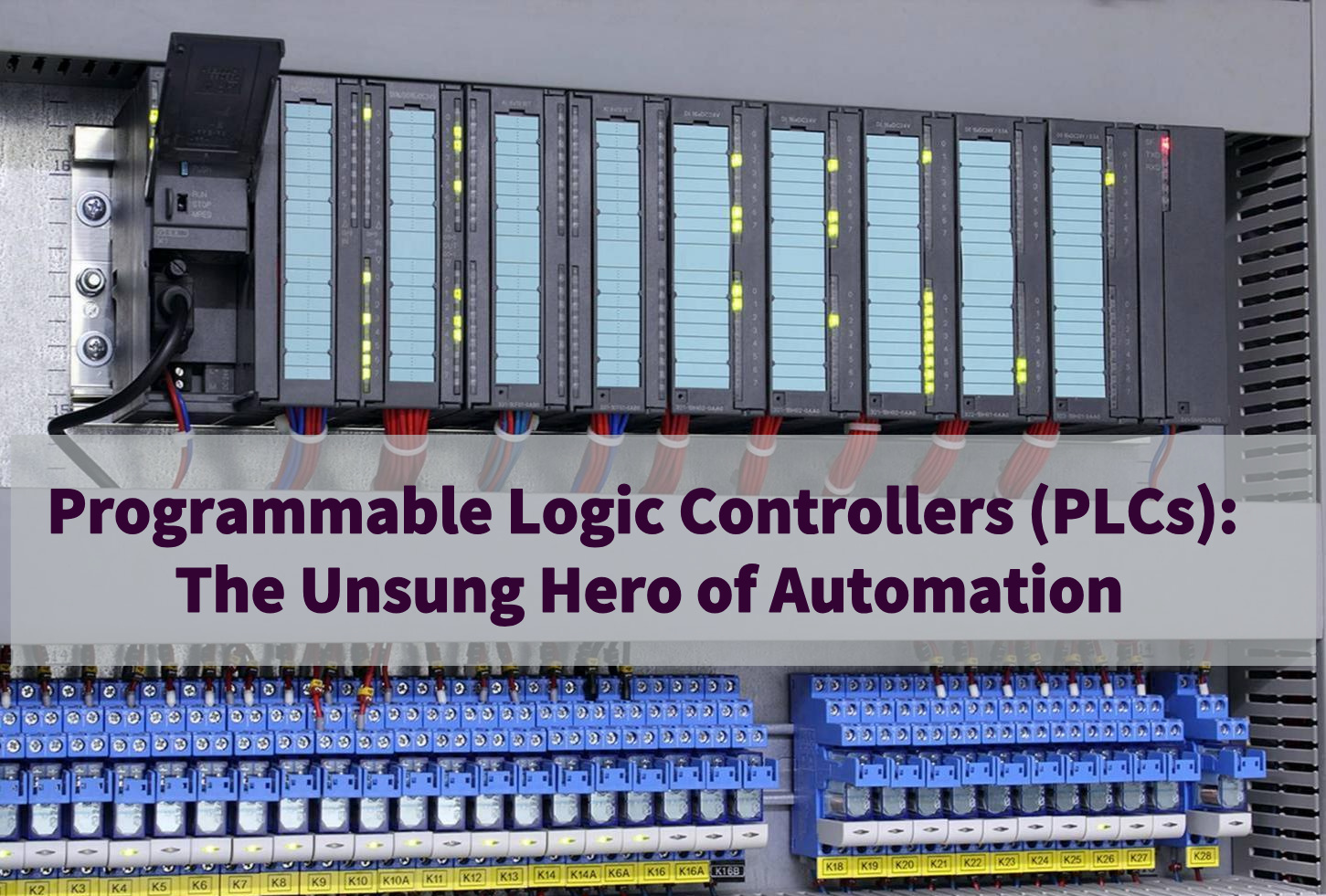
Programmable Logic Controllers (PLCs): The Unsung Hero of Automation
If you’ve ever wondered what keeps modern factories running smoothly, the answer is simple: Programmable Logic Controllers (PLCs) . These rugged industrial computers have been the foundation of automation for over 50 years—and they’re not going anywhere.
What Is a PLC?
A Programmable Logic Controller is an industrial-grade computer designed to control manufacturing processes and machinery. Unlike your desktop PC, PLCs are built to survive harsh environments—extreme temperatures, vibration, electrical noise, and humidity.
Think of a PLC as the brain of an automated system. It reads inputs from sensors and switches, runs a user-programmed logic routine, and then activates outputs like motors, valves, and lights.
How PLCs Work: The Scan Cycle
PLCs operate in a continuous loop called the scan cycle:
- Read Inputs – Check status of all connected sensors and switches
- Execute Program – Run the control logic (typically ladder logic)
- Update Outputs – Turn motors, valves, and indicators on or off
- Housekeeping – Handle communications and diagnostics
This cycle repeats in milliseconds, creating seamless, real-time control.
Why PLCs Dominate Manufacturing
| Advantage | Why It Matters |
|---|---|
| Reliability | Built for 24/7 operation, years without failure |
| Ruggedness | Withstands vibration, heat, and electrical noise |
| Flexibility | Reprogram instead of rewire for process changes |
| Easy Troubleshooting | LED indicators and diagnostics simplify maintenance |
| Long Lifecycle | Manufacturers support products for decades |
Common PLC Applications
PLCs are everywhere in industry:
- Assembly Lines – Controlling robotic arms and conveyor sequences
- Packaging Machinery – Managing filling, sealing, and labeling
- Water Treatment – Regulating pumps, valves, and chemical dosing
- Material Handling – Coordinating sortation and warehouse systems
- HVAC Control – Managing large building environmental systems
The Critical Role of Power Supplies
A PLC is only as reliable as the power that feeds it. Power disturbances that might reboot a office computer can halt an entire production line.
What PLCs Need from a Power Supply:
- Clean, Stable DC Voltage – Typically 24VDC for I/O, 5VDC or 3.3VDC for logic
- Hold-up Time – Ride through brief AC power interruptions
- Isolation – Protect sensitive circuits from electrical noise
- Reliability – Industrial-grade components for continuous duty
All C2PSU power supplies feature:
- Wide input range (90-264VAC) for global use
- Short-circuit and overload protection
- LED status indicators

Über den Autor

Verwandte Beiträge

Choosing the right voltage for your power supply is a critical decision that affects performance, safety, and longevity of your electronic systems. While it may... Lesen Sie weiter
Power isn’t just an afterthought for your robot—it’s its lifeblood. Selecting the correct battery charger and power cord is one of the most critical, yet... Lesen Sie weiter
A high-performance CPU, a powerful GPU, fast storage—these are the components that capture our attention when building or upgrading a system. Yet, the component that... Lesen Sie weiter
In the vast landscape of industrial automation, we often celebrate the “brains” of the operation—the controllers and computers that make decisions. However, the true “muscle”... Lesen Sie weiter

High-voltage (HV) power supplies are the workhorses behind critical applications like medical imaging (X-ray, CT scanners), semiconductor manufacturing, scientific instrumentation, and industrial processing. While much... Lesen Sie weiter





Kommentar hinzufügen