Es befinden sich keine Produkte im Warenkorb.











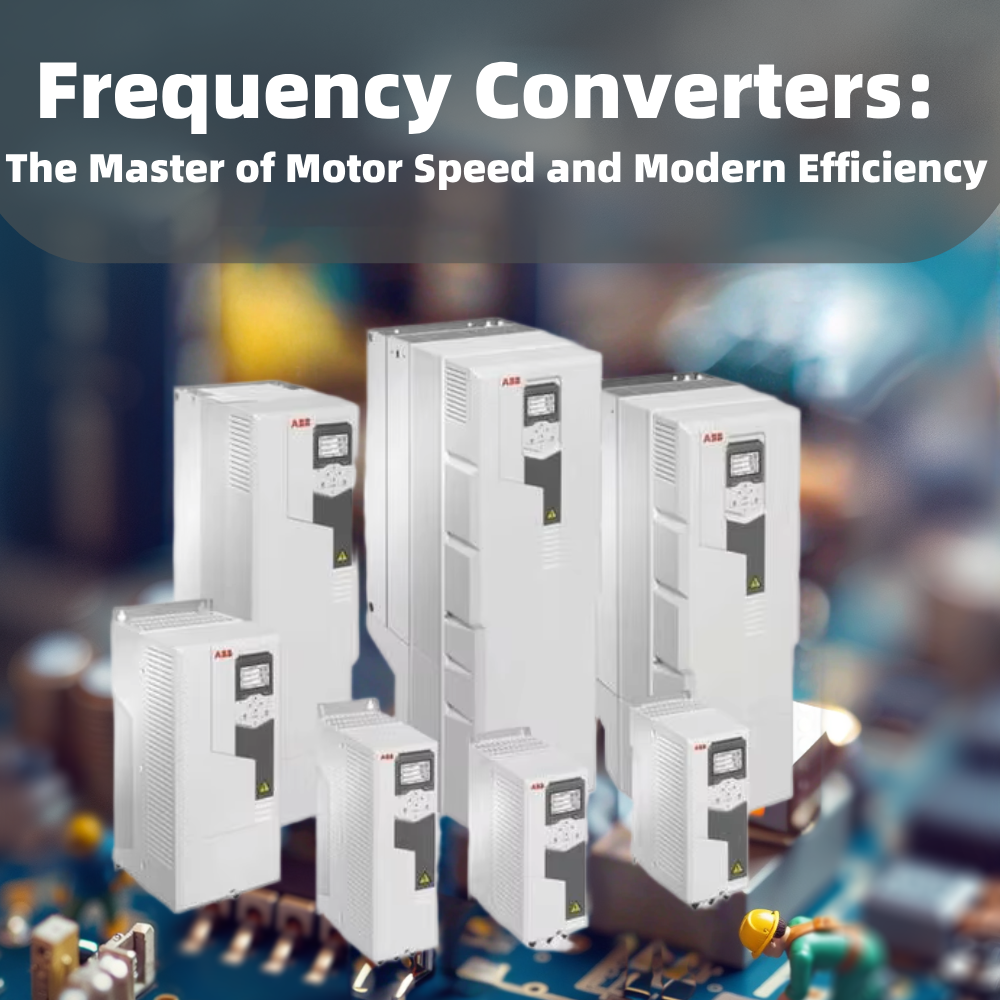
Frequency Converters: The Master of Motor Speed and Modern Efficiency
In the vast landscape of industrial automation, we often celebrate the “brains” of the operation—the controllers and computers that make decisions. However, the true “muscle” of any factory is the electric motor. And the device that gives this muscle its finesse, efficiency, and intelligence is the Frequency Converter.
Also commonly known as a Variable Frequency Drive (VFD) or an Adjustable Speed Drive (ASD) , the frequency converter is an electronic powerhouse that has revolutionized how we control motion. It is no longer just about making a motor run; it is about making it run exactly right.
What is a Frequency Converter?
At its core, a frequency converter is an electronic device that converts a fixed voltage and frequency AC input (such as 480V at 60Hz) into a variable voltage and frequency output. This adjustable output is used to control the speed, torque, and direction of an AC induction motor.
The principle is rooted in basic motor theory: the synchronous speed of an AC motor is determined by the frequency of the power supply and the number of motor poles. By manipulating the input frequency, we can directly command the motor’s rotational speed (RPM). Lower the frequency, and the motor slows down; increase it, and the motor speeds up.
The Inner Workings: From AC to DC and Back Again
To understand how a frequency converter achieves this variable output, one must look at its internal architecture, which typically follows a three-stage process:
- The Rectifier Section (AC to DC): The incoming AC power line is connected to a diode bridge rectifier. This section acts as a one-way valve, converting the alternating current (AC) into a pulsating direct current (DC).
- The DC Bus (Smoothing and Storage): This raw DC power is then fed into a “DC bus,” which consists of a bank of large capacitors. These capacitors act as a reservoir, smoothing the pulsating DC into a clean, steady, and stable DC voltage. This stored energy also allows the drive to ride through minor voltage sags on the input line.
- The Inverter Section (DC to Variable AC): This is the heart of the frequency converter. The smooth DC power is sent to an inverter section composed of high-speed electronic switches called Insulated Gate Bipolar Transistors (IGBTs). By switching these transistors on and off thousands of times per second using a technique called Pulse Width Modulation (PWM), the drive synthesizes a new AC waveform that mimics a pure sine wave. By varying the width and timing of these pulses, the drive precisely controls both the frequency and the voltage going to the motor.
The Strategic Advantages of Using a Frequency Converter
The adoption of frequency converters has grown exponentially because they offer tangible benefits that impact both the bottom line and operational capability.
- Significant Energy Savings: This is the most prominent driver for their use. In variable torque applications like centrifugal fans and pumps, the power required by the motor is proportional to the cube of its speed. This means reducing speed by just 20% can lead to a 50% reduction in energy consumption. Instead of wasting energy with mechanical dampers or valves, the drive only supplies the power the motor actually needs.
- Superior Process Control: Frequency converters allow for precise, repeatable control over speed, acceleration, and deceleration. This is critical in applications such as conveyor belts that must synchronize, mixers that require a specific agitation rate, or winding machines that need constant tension.
- Reduced Mechanical Stress and Maintenance: By providing a “soft start,” the drive ramps the motor up to speed gradually, eliminating the high inrush current and mechanical shock of a traditional across-the-line start. This reduces stress on the motor windings, as well as on connected mechanical components like gears, belts, and bearings, significantly extending the lifespan of the equipment.
- Extended Motor Life: The drive protects the motor from electrical and thermal stresses. Many modern drives include features like under-voltage, over-voltage, and over-current protection, as well as advanced motor thermal modeling to prevent overheating.
Advanced Features and Modern Integration
Today’s frequency converters are far more than simple speed regulators. They are intelligent, connected devices that serve as a hub for motor information. They often include:
- Embedded PID Controllers: Allowing the drive to automatically maintain a process variable, such as constant pressure in a pipe or constant airflow, without needing an external controller.
- Industrial Communication: Equipped with protocols like EtherNet/IP, PROFINET, or Modbus, they seamlessly integrate with PLCs and SCADA systems, providing real-time data on motor status, energy usage, and fault diagnostics.
- Safe Torque Off (STO): A safety feature that removes power to the motor to prevent unintended startup, ensuring the safety of personnel working on machinery.
Schlussfolgerung
From the massive ventilation fans in underground tunnels to the precise spindles in a CNC machining center, the frequency converter is an indispensable component of the modern world. It transforms a simple, fixed-speed motor into a precision tool, unlocking unprecedented levels of energy efficiency, process control, and mechanical longevity. It is, without a doubt, the master of modern motor control.


Über den Autor

Verwandte Beiträge

Choosing the right voltage for your power supply is a critical decision that affects performance, safety, and longevity of your electronic systems. While it may... Lesen Sie weiter
Power isn’t just an afterthought for your robot—it’s its lifeblood. Selecting the correct battery charger and power cord is one of the most critical, yet... Lesen Sie weiter
A high-performance CPU, a powerful GPU, fast storage—these are the components that capture our attention when building or upgrading a system. Yet, the component that... Lesen Sie weiter
If you’ve ever wondered what keeps modern factories running smoothly, the answer is simple: Programmable Logic Controllers (PLCs) . These rugged industrial computers have been the foundation... Lesen Sie weiter

High-voltage (HV) power supplies are the workhorses behind critical applications like medical imaging (X-ray, CT scanners), semiconductor manufacturing, scientific instrumentation, and industrial processing. While much... Lesen Sie weiter





Kommentar hinzufügen